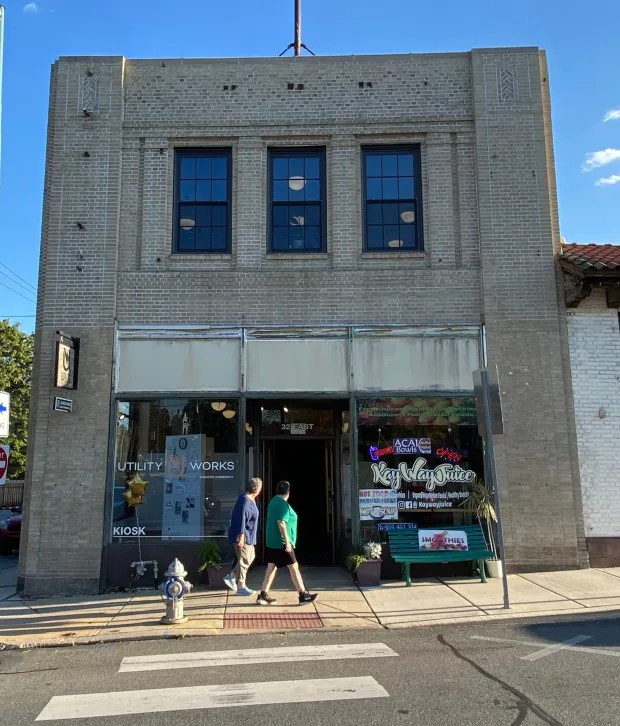
Utility Works was already an important resource for artists when I became Executive Director of the Lansdowne Economic Development Corporation. It provided affordable studios and creative workspace in a community with a strong concentration of artists, but its spaces, programs, and long-term future were not yet operating as one coordinated strategy.
Utility Works could provide artists with space to work, tools they might not be able to access independently, places to teach and exhibit, professional opportunities, and connections to a wider creative community. It could also become a long-term cultural asset for Lansdowne, supporting the Borough’s broader identity and economic development strategy. Culture needs more than programs. It needs places where people can work, make, teach, meet, and stay.
Making the space work

MakerSpace Classroom, formerly at another location
When I arrived, Utility Works was already serving artists, but the organization was also managing multiple creative spaces within a three-block radius, with overlapping operations that strained staff and equipment, studios, classrooms, and public programming across different locations. The first challenge was practical: make the physical infrastructure easier to operate.
As the LEDC consolidated its disparate offices and creative programming into one building, Utility Works, I led the organizational side of the move and helped coordinate the transition into a more integrated working environment. The first floor was reorganized to support staff, public programs, shared creative activity, and more consistent use of the building.
Bringing staff, studios, equipment, exhibitions, and programming into closer relationship made it easier to see Utility Works as one connected cultural resource rather than a series of separate rooms and functions. The first step was not expansion. It was making the existing pieces work together more coherently.
Space for artists to work, learn, and be seen
Utility Works included 23 artist studios, a pop-up gallery, a MakerSpace classroom and ceramic studio, the LEDC offices, and an independently operated Juice Bar. The building supported diverse uses, including education, workforce development, classroom activities, exhibitions, workshops, professional development, and opportunities for artists to engage with the public.

Kiosk Gallery, Utility Works
During my time, I worked to strengthen those connections. An artist renting a studio could also be paid to teach a public workshop, exhibit their work, meet other creative professionals, or connect with a commission or public program. The Kiosk Gallery created a small but visible exhibition platform. Classroom and maker spaces expanded the kinds of creative activity the building could support.
The aim was to make the building more useful to a diverse group of creatives and to provide space, shared resources, and opportunities for them to grow professionally.
Shared tools, shared capacity

Ceramic Classroom, Utility Works
Creative infrastructure also includes resources that are difficult or expensive for individuals to maintain on their own. The developing maker infrastructure at Utility Works included shared equipment and tools such as laser cutters, 3D printers, sewing and embroidery equipment, vinyl cutters, and large-format printers.
My role was to connect those resources to a larger operational and programmatic strategy: how would equipment be managed, how would people learn to use it, how would access be structured, and how could shared resources create new opportunities for artists and other creative workers?
From building operations to cultural strategy
As the program developed, I increasingly saw Utility Works as part of a larger creative economy system. The building connected affordable workspace with exhibitions, professional development, creative opportunities, public programming, and the broader cultural identity of Lansdowne. That meant thinking beyond day-to-day occupancy.
What would make the building sustainable over time? How could below-market studio space be protected? How could shared creative resources expand without creating unsustainable operating burdens? How could the organization reduce its dependence on short-term arrangements and gain more control over a critical cultural asset?
Those questions became part of the broader Public Works: Art + Economy strategy.
Planning for long-term stewardship
Utility Works eventually became part of a larger acquisition and sustainability strategy. As Executive Director, I led the organizational and fundraising planning around the possibility of purchasing the building, integrating that work into LEDC’s broader financial sustainability strategy and long-term creative economy plan.
Ownership could help protect affordable artist space, support continued investment in shared infrastructure, reduce long-term uncertainty, and give the organization greater control over a building already central to its mission.

Kiosk Gallery, Utility Works
The strategy included long-range capital planning and preparation for public funding opportunities, including a planned Local Share Account request to support acquisition and rehabilitation. As part of this work, I secured a capital gift that enabled us to establish an endowment at the Foundation for Delaware County to steward. The goal was to move from occupying cultural space to stewarding it for the long term.
What Utility Works made possible
- 23 artist studio rentals
- 1 MakerSpace
- 1 Ceramics Studio
- 1 Kiosk Gallery
- Multiple pathways to exhibit, teach, learn, and connect
- Expanded shared resources for making, fabrication, and professional development
Utility Works became one of the clearest examples of how I think about cultural infrastructure. Physical space mattered, but the building’s value came from the relationships around it: artists working near one another, public programs bringing new people inside, shared tools expanding what individuals could do, and long-term planning aimed at protecting the resource itself.