April 23, 2022 – June 11, 2022
InLiquid Gallery, Philadelphia
Curated for InLiquid
Overview
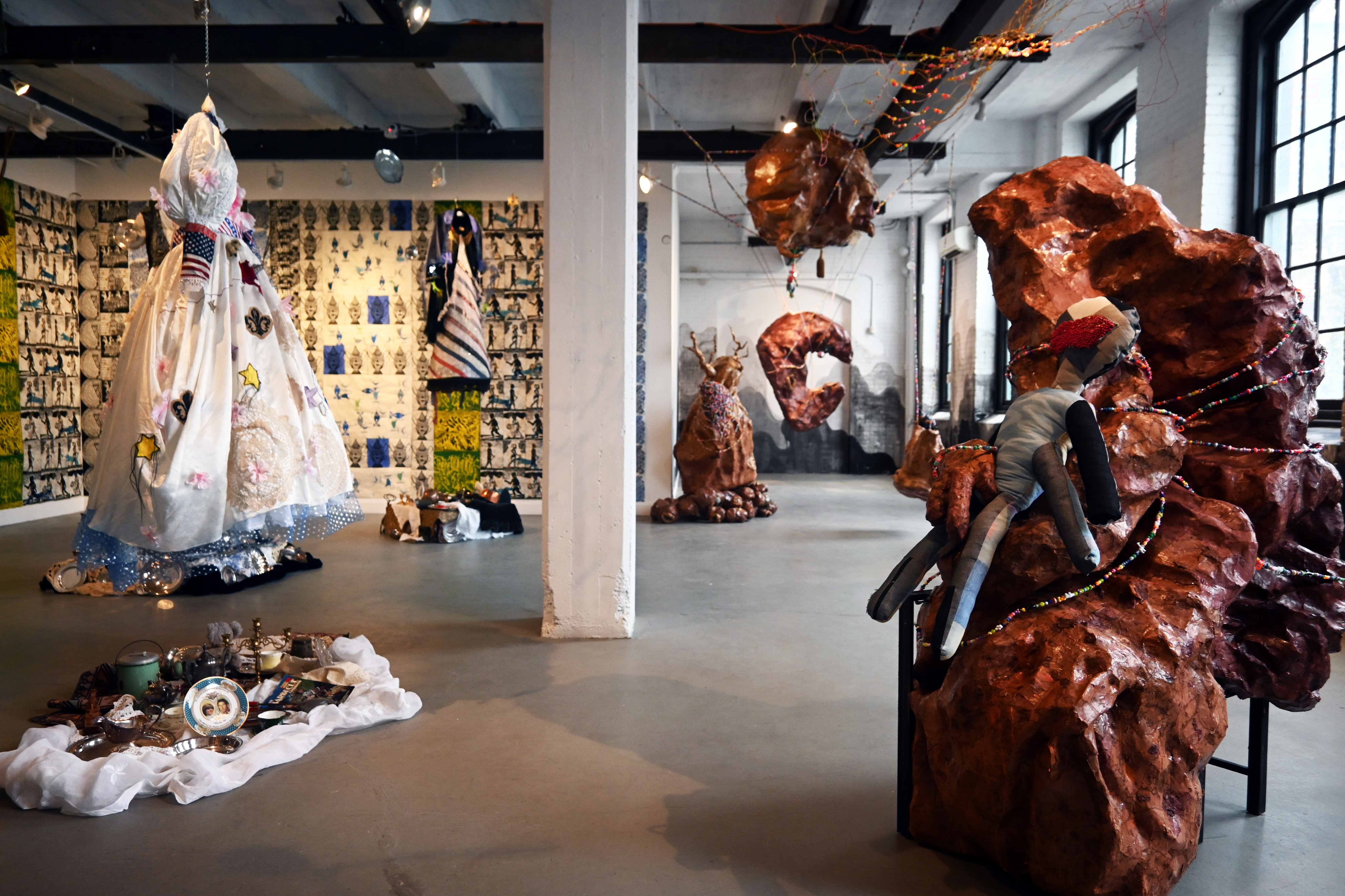
What Are We Claiming? brought together Cheryl Harper and rod jones ii, two Philadelphia-area artists whose work investigated family history and the concept of the archive.
Harper’s practice is grounded in sustained research. Working with family photographs, documents, heirlooms, and historical records, she examines the ways individual lives intersect with broader histories of the Jewish diaspora, race, class, migration, and belonging. jones approached the archive more speculatively. Working with found materials, fragments, and objects already marked by use, he asked what happens when the historical record is incomplete, inaccessible, or unable to account for lived experience. His work pushed against the idea that an archive simply preserves reality, asking instead who has the authority to decide what is remembered and what role imagination can play in reconstructing what has been lost.
Presented together, their work raised a central question: What can we claim when family history is preserved unevenly, and who gets to decide what becomes part of the record?
Curatorial Approach
The exhibition began with sustained conversation among the artists and myself. Over nearly two years, the project developed through studio visits, research, conceptual prompts, and discussion about family, memory, evidence, and the limits of the historical record.
The installation itself was shaped by the artists and the needs of the work. My curatorial role focused on developing the intellectual relationships among the works and creating enough context for visitors to move between two distinct artistic and historical positions.
I focused on leaving space for the tension between Harper and jone’s approach to memory and the archive that the viewer could revel in.


Exhibition views
Who has the right to shape the archive?
For jones, the gaps in the historical record became a space of inquiry. His work asked whether people must accept an archive defined by what institutions have preserved, or whether individuals can claim agency in constructing what is remembered, imagined, and carried forward.
Harper, meanwhile, worked through more traditional forms of historical research, drawing on family objects, photographs, documents, and genealogical records.
The exhibition placed those approaches beside one another without suggesting that access to history is equal, that every object carries the same claim to authenticity, or that absence can simply be repaired.


Beading details in Harper and jones’ works
Extending the conversation beyond the gallery
Cheryl Harper Artist Talk & Gallery Conversation
Led by Ezter Kuntas of the Philadelphia Holocaust Remembrance Foundation, this artist talk and gallery conversation offered a deeper look at Harper’s research into family history, Jewish migration, inherited objects, and the unequal preservation of family histories.
The partnership created a direct connection between the exhibition and Philadelphia’s Jewish community, bringing its questions about memory, inheritance, privilege, and historical evidence into conversation with audiences beyond the gallery.
dolls to (re)member by Workshop
jones’s hands-on workshop offered a material entry point into the exhibition’s questions about memory, ancestry, identity, and the making of personal archives.
Rather than asking participants to approach those questions only through historical or academic frameworks, the workshop extended Jones’s own practice of imagining, constructing, and giving form to histories that may not survive in conventional archives.
CraftNOW’s First Friday Preview of What Are We Claiming?
Harper and Jones discussed the exhibition and their individual practices as part of CraftNOW’s First Friday Preview, placing the project within Philadelphia’s broader craft and material culture community.
Interpretation beyond the gallery
I developed a digital exhibition catalog to extend the artists’ research, images, and curatorial framework beyond the physical exhibition. I also commissioned art historian Caitlin Swindell to contribute an independent exhibition essay examining the artists’ contrasting approaches to archives, memory, and historical evidence. Together, these materials created a deeper record of the project and allowed its questions to continue beyond the gallery.
Selected Press
The Philadelphia Tribune
“What Are We Claiming?” Compares Jewish and Black Experiences, Kiersten Adams
Read coverage →
The Philadelphia Jewish Exponent
“InLiquid Exhibit Puts Family Histories in Dialogue”, Sasha Rogelberg
Read coverage →
All images curtesy of InLiquid