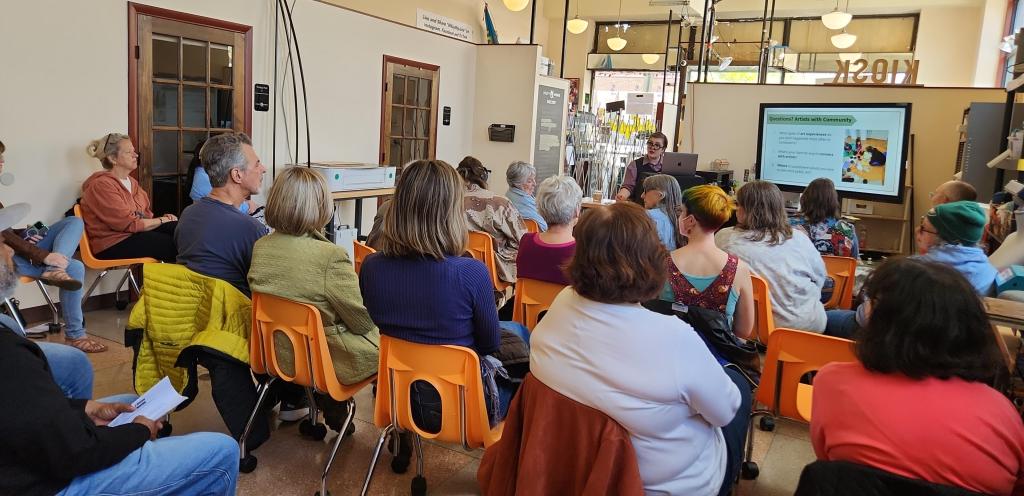
Successful creative economy work requires paying attention to who is present when public priorities are set, funding is distributed, spaces are planned, and decisions are made about a place’s future. Throughout my work, I have advocated for artists and cultural organizations to be understood not as decorative additions to public life, but as workers, businesses, employers, educators, community partners, and contributors to local economies.
That work has taken place across conversations with state agencies, elected officials, county and regional partners, local government, funders, arts organizations, businesses, and other civic institutions. My role is often to make connections visible: to explain why a cultural space is also economic infrastructure, why an artist’s time is labor, why arts organizations belong in planning conversations, and why creative people should help shape decisions that affect the places where they live and work. Representation matters because decisions made without artists still shape artists’ lives.
Getting creatives into the room
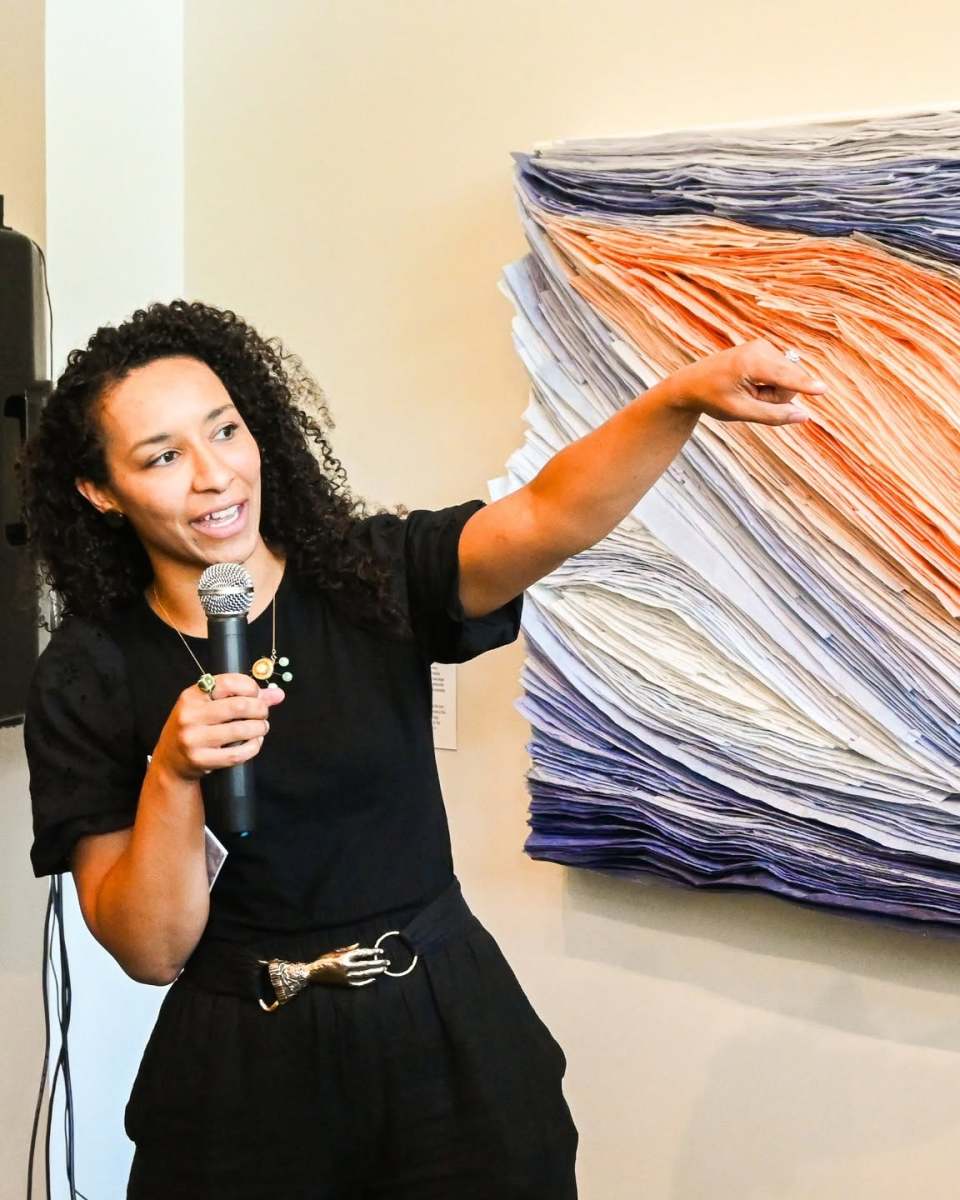
Samara Weaver, artist, speaking about her work
Artists and cultural organizations are often affected by decisions made in spaces where they are not present. Funding priorities, public-space projects, redevelopment, transportation, zoning, district planning, and economic-development programs can all affect creative communities. Too often, artists are brought in after major decisions have already been made and asked to add visibility, beauty, or public engagement to a structure they had no role in shaping.
I have worked to bring artists and cultural organizations into those conversations earlier. At LEDC, that meant making arts and culture part of conversations with Borough government, county and regional partners, state agencies, funders, elected officials, businesses, and the broader Main Street planning process.
It also meant making sure artists were not discussed only as event participants or people seeking support. They were part of the local workforce and part of the community’s economic and civic future. The goal is not simply to invite artists into the room. It is to make their knowledge relevant to the decisions being made there.
Translating between sectors
A large part of my work happens between systems that do not always share the same language. Artists may understand exactly what a community needs but have little familiarity with public funding or government processes. Businesses may value cultural activity without recognizing artists as workers or creative services as part of the economy. Government agencies may support the arts while still treating cultural infrastructure as separate from economic development. I often work as a translator among those groups.
That can mean helping an arts organization understand how its work fits within economic-development priorities. It can mean explaining to a business why paying an artist is different from asking for exposure. It can mean helping a public agency understand why a studio building, gallery, or community arts space should be treated as infrastructure. It can also mean helping artists navigate applications, public systems, funding requirements, and institutional expectations.
The work is not about making every sector think alike. It is about creating enough shared language for collaboration to become possible. Many good ideas fail not because people disagree, but because they do not understand how to work across one another’s systems.
Valuing creative labor
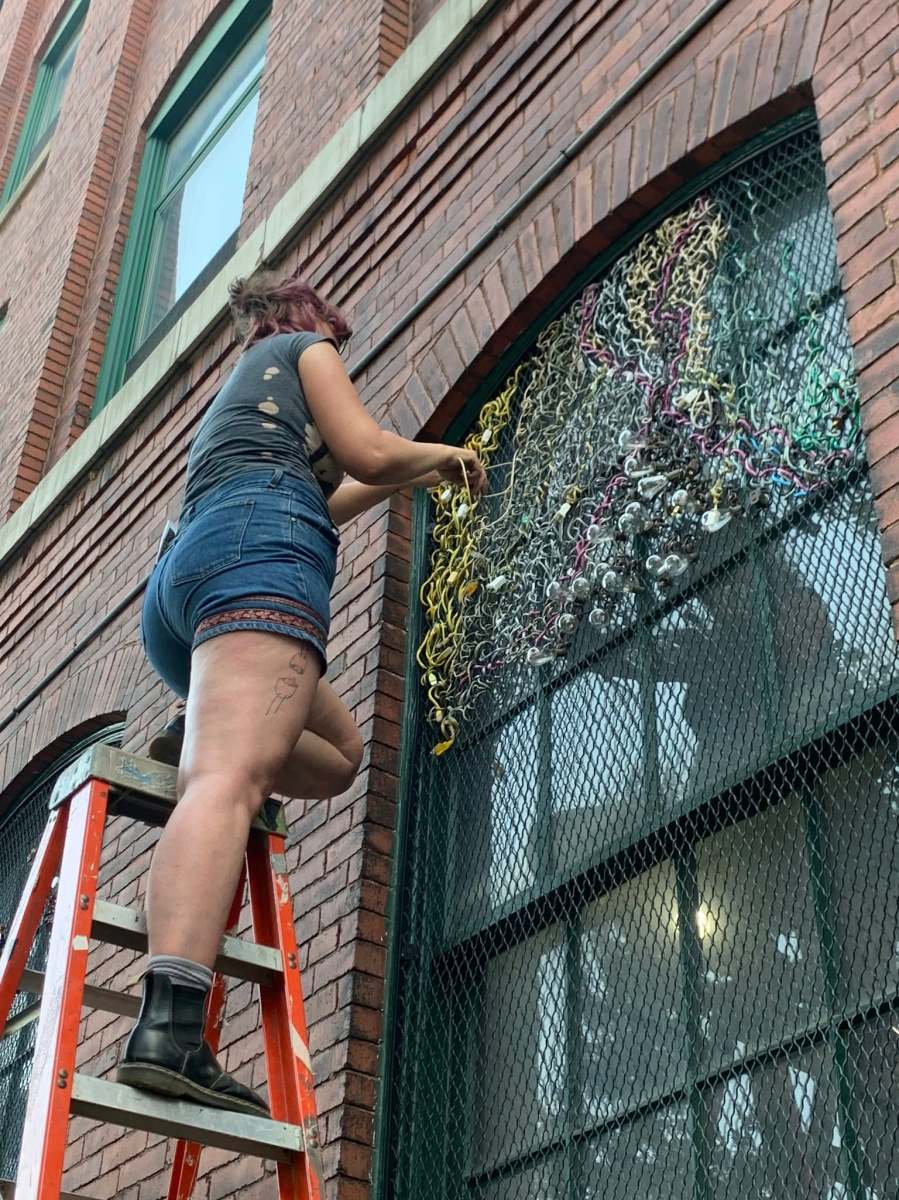
Jazmyn Crosby, artist, installs a public artwork
Artists are often invited to contribute ideas, energy, atmosphere, community connection, and visibility, while compensation is treated as optional. I have tried to challenge that pattern wherever I have had influence.
That means creating paid opportunities when possible, building artist compensation into project budgets, advocating for fees and commissions, and helping non-arts partners understand that creative labor has economic value.
It also means being honest about the limits of “visibility.” Exposure can be useful, but it is not a substitute for payment, particularly when organizations, businesses, or public institutions are receiving direct value from an artist’s work.
I advocate not only for artists to be included, but for their labor to be understood, valued, and compensated. Inclusion matters, but inclusion without resources can still reproduce the same imbalance. Whenever possible, I try to move conversations beyond who gets invited and toward who gets paid, who holds decision-making power, and who benefits when cultural value is created.
Advocacy in practice: Arts and culture in Main Street planning
As LEDC developed its Main Street strategy, I worked to ensure that arts and culture were not treated as a separate program area but were integrated into conversations about business development, public space, communications, district identity, and long-term economic strategy.
Learn more →
Advocacy in practice: Making the case for cultural infrastructure
I have advocated for cultural assets such as Utility Works and the 20*20 House in conversations about funding, long-term planning, and community development. The argument was not simply that these places were valuable because people liked them. They supported working artists, public programming, education, foot traffic, community identity, and local economic activity. Protecting them required translating cultural value into terms that funders, government partners, and economic-development systems could act on.
 Clare Finin